Seen or Kept: The Real Difference Between a Visible Tattoo and a Hidden One
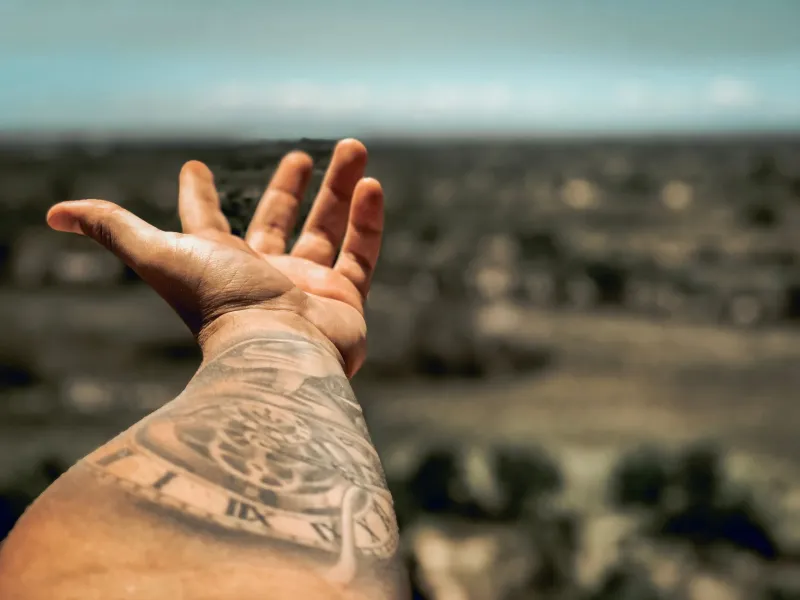
A tattoo on your forearm and a tattoo on your ribcage might be the exact same design. Same artist. Same ink. Same intention.
But they are not the same tattoo.
Where a piece lives on your body changes everything — who gets to see it, what it communicates to the world, how it fits into your daily life, and what kind of relationship you end up having with it over time. Placement is one of the most consequential decisions in the entire tattooing process, and it's also one of the most underexplored.
Let's actually explore it.
The Visible Tattoo: You're Making a Statement Whether You Mean To or Not
When a tattoo is visible in everyday clothing — hands, neck, face, forearms, lower legs — it enters public space. It becomes part of how strangers read you before you've said a word. That's not inherently a problem. For a lot of people, that's exactly the point.
But it does mean the tattoo carries a social weight that hidden ink doesn't. And that weight is distributed unevenly depending on where you live, what you do for work, and who you're around.
In major US cities — New York, LA, Austin, Chicago — visible tattoos have become largely normalized across a wide range of industries and social contexts. A barista with a sleeve and a financial analyst with a neck tattoo can exist in the same zip code without much friction. But step into certain professional environments, certain family gatherings, certain parts of the country, and the math changes fast.
This isn't a moral judgment. It's a practical reality. And experienced artists know it.
"When someone comes in wanting their first tattoo on their hand or neck, I always ask about their work situation," says one artist based in Nashville. "Not to talk them out of it — I'm not their parent — but because I want them to make the choice knowing what it might mean for them. Some people have thought it through completely. Some genuinely haven't."
The Career Conversation Nobody Wants to Have
The professional implications of visible tattoos in the US are shifting but not gone. Healthcare, law, finance, education — many of these fields still carry unspoken (and sometimes explicit) expectations about visible body art.
The frustrating reality is that this can vary wildly by employer, region, and even manager. One hospital system might have no policy. Another might require visible tattoos to be covered. A law firm in New York might not blink. One in a smaller market might.
What this means practically: if your career path involves any of these fields, the visibility question isn't just aesthetic. It's strategic. And it's a conversation worth having with yourself and your artist before placement is decided.
The good news? A skilled artist can often adapt a concept to a placement that gives you the piece you want while keeping your options open. That's not compromise — that's smart design.
Hidden Tattoos: Private Meaning in a Public World
On the other side of the equation, there's something genuinely powerful about ink that only you — and whoever you choose — get to see.
Ribcage tattoos. Hip pieces. Upper thigh designs. Work that lives under clothing in almost every social context. These pieces exist in a different register entirely. They're not performing for anyone. They don't need to be explained at a family dinner or defended in a job interview. They just are.
For a lot of people, that privacy is the whole point. A tattoo that marks something deeply personal — a health journey, a loss, a transformation, an aspect of identity that isn't public knowledge — can feel more meaningful when it's not on display. It belongs to you in a way that visible ink sometimes doesn't.
"I have clients who've gotten tattoos that nobody in their daily life knows about," one artist explains. "And they describe it as this secret they carry with them. It's not about hiding. It's about having something that's entirely theirs."
There's also a reclamation dimension here that's worth naming. People who've experienced trauma related to their bodies — illness, surgery, assault, pregnancy loss — sometimes use hidden tattoos as a way of reestablishing a relationship with that part of themselves. The placement is the message. The art transforms something painful into something intentional.
What Different Placements Actually Require From the Artist
Beyond the social and psychological dimensions, placement has real technical implications — and it changes what an artist needs to know before they start drawing.
Hands and fingers: Notoriously difficult to keep looking sharp over time. The skin here moves constantly, fades faster, and is more prone to blowout. A good artist will tell you this upfront and either adjust the design accordingly or let you know you'll likely need touch-ups.
Ribs and sternum: Painful — often described as some of the most uncomfortable placements on the body — and also subject to significant movement with breathing. Designs need to account for this. Long, flowing pieces tend to work better here than dense, detailed ones.
Neck and face: Require an artist who is genuinely experienced with the placement, not just technically skilled in general. The skin is different. The stakes of placement errors are higher. Reputable artists often won't take these pieces on clients who don't already have significant coverage — not gatekeeping, but a recognition that these placements deserve serious consideration.
Inner wrist and collarbone: Popular for a reason — they're relatively flat, heal well, and offer a nice balance between visible and partially hidden. But the collarbone especially can be tricky depending on bone structure. What looks centered in a photo might not sit the same on every body.
The Conversation Your Artist Actually Wants to Have
Here's the thing: placement is a collaborative decision, and the best artists treat it that way. They're not just asking where you want the tattoo — they're thinking about how the design will flow with your body's natural lines, how it will look in motion, how it will age, and whether the placement serves the concept.
Bring your placement ideas to a consultation, but hold them loosely. An artist who suggests an alternative isn't dismissing your vision. They're applying years of experience to help it land better.
And if an artist just says "sure, wherever you want" without any discussion? That's worth noticing too.
Visible or Hidden — Both Are Valid
There's no hierarchy here. A tattoo that lives in public isn't more courageous than one that stays private. A hidden piece isn't more meaningful than a visible one. Both choices reflect something real about the person making them.
What matters is that the choice is actually made — consciously, with full awareness of what it means to put ink in that particular spot on that particular body.
Because the placement doesn't just change where the tattoo is. It changes what the tattoo is.