Same Design, Totally Different Story: Why Where You Put It Matters More Than You Think

You've spent weeks—maybe months—narrowing down the design. You've scrolled through hundreds of reference images, saved a dozen posts, maybe even sketched something yourself. But here's the conversation most people aren't having nearly enough before they sit down in the chair: where does it go?
Placement isn't a footnote in the tattoo process. It's a full chapter. The same design, moved three inches in any direction or shifted to a completely different part of the body, can change the message it sends, how it feels to wear, and even how it heals. Artists talk about this all the time among themselves—it's one of those insider conversations that doesn't always make it to the client until they're already in the consultation.
Let's change that.
The Body as a Map of Meaning
Long before tattoos became the mainstream art form they are today, different cultures assigned specific significance to different parts of the body. In Japanese irezumi tradition, placement on the chest, back, and upper arms carried weight tied to honor, strength, and social identity. In Polynesian tattooing, the body was essentially a visual autobiography—certain areas reserved for lineage, others for personal achievements.
Western tattoo culture has absorbed some of this awareness, even if it's often more intuitive than intentional. Ask almost any tattoo artist in the US and they'll tell you: clients don't always realize they're making a symbolic choice when they pick a spot, but they almost always are.
"People come in saying they want something 'small and subtle' on their ankle or behind their ear," says Marcus, a tattoo artist with over a decade of experience in Chicago. "But when I ask them why that spot, we end up in this whole conversation about visibility and who they're getting the tattoo for. Sometimes it's for themselves. Sometimes it's for the world. That distinction matters for placement."
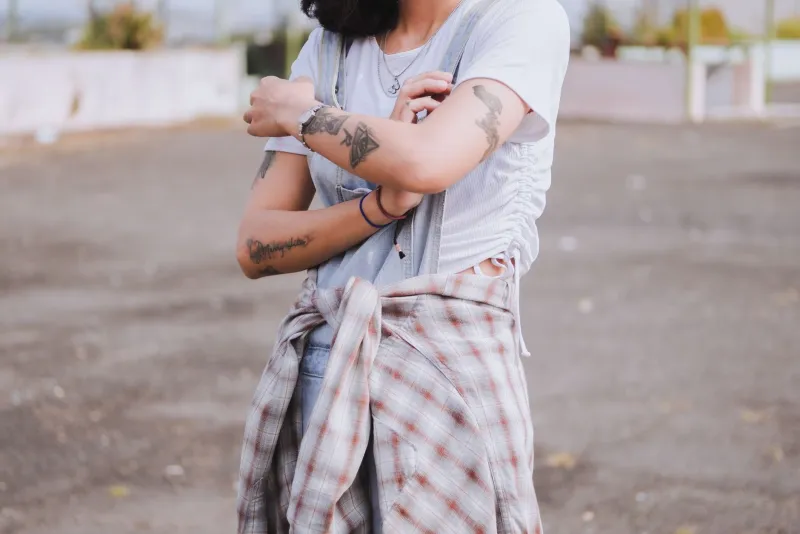
He's onto something. Tattoos on visible, outward-facing areas—hands, neck, forearms—tend to function as declarations. They're designed, consciously or not, to be seen. Tattoos tucked into private spaces—ribs, inner thigh, behind the knee—often feel more like personal rituals. They're for the person wearing them first.
What Happens When You Move the Same Image
Consider a simple example: a small, delicate moth. Place it on the back of the neck and it reads as bold, even a little edgy—visible to everyone behind you, hidden from your own direct line of sight. That tension between visibility and personal blindness? That's loaded with meaning. Now move that same moth to the inside of your forearm. Now it's something you see every time you reach for something, a constant quiet reminder of whatever the moth means to you—transformation, attraction to light, navigating darkness.
Slide it to the sternum, right over the heart, and suddenly it becomes deeply intimate. Rarely seen by others, but felt. Present during every heartbeat.
Same moth. Three entirely different tattoos.
Tattoo artist Lena, who works out of a studio in Austin, Texas, describes a client consultation she had last year that stuck with her. "A woman came in wanting a compass rose. She'd been through a divorce and it was about finding her direction again. She initially wanted it on her shoulder blade—very common spot, very pretty. But as we talked, she mentioned she wanted to see it herself every day as a reminder. I suggested the inside of her wrist instead. She cried a little. It was the right call."
That's the conversation that changes everything.
The Psychology of Visibility
There's actual research behind the instincts artists like Lena are working from. Studies on body image and self-expression suggest that where we choose to mark ourselves reflects how we feel about certain parts of our identity—which ones we want to broadcast and which ones we hold close.
People who get tattoos in highly visible areas often report feeling a sense of ownership over their public identity. They're curating what the world sees. On the flip side, tattoos in hidden places frequently come with more emotionally intense personal narratives. They're not performing for anyone. They're just there, for the wearer.
There's also the question of the body part's symbolic weight in everyday culture. The chest has long been associated with the heart, courage, and core identity. The spine carries connotations of strength and backbone—literal and metaphorical. The hands are about action, craft, and work. Even the foot, often dismissed as a purely practical choice, carries meaning: it's what moves you forward, what connects you to the ground.
"I always ask clients what they associate with that part of their body," says Derek, a tattoo artist based in Brooklyn who specializes in fine-line work. "Not in a therapy kind of way—just casually. The answers are always interesting. Someone wanted a wave on their collarbone and when I asked why there, she said it was because she felt like she was always keeping things at the surface, trying not to let stuff sink in. That told me everything about how to approach the design."
When Aesthetics and Meaning Collide
Of course, placement isn't purely psychological. Artists are also thinking about how a design works on a specific body part—how it flows with muscle and bone structure, how it'll age, how it reads at different distances.
Certain designs don't translate well to certain placements, no matter how meaningful the spot might be. A heavily detailed piece on a finger will blur within a few years. Large, sweeping florals can get distorted on a curved surface if the artist doesn't account for the body's contours. This is where the artist's experience becomes genuinely invaluable—they're thinking in three dimensions about a two-dimensional design.
"I had someone who wanted a really intricate mandala on the back of their hand," Derek recalls. "I loved the idea, but I had to be honest with them about longevity. We talked about scaling it differently and adjusting some of the finer details. The placement stayed the same, but the design adapted to serve that placement. That's the collaboration."
Starting the Placement Conversation
If you're heading into a consultation, here are a few things worth thinking about before you sit down:
Who is this tattoo for? If it's primarily for you—a personal reminder, a private meaning—consider placing it somewhere you'll see or feel it regularly. If it's an expression of identity you want to share, visible placement makes sense.
How does that body part make you feel? Do you love your forearms? Feel self-conscious about your ribs? Your relationship to that area of your body will affect how you feel about the tattoo long-term.
What's the design's natural shape? Long, flowing pieces often work beautifully on the spine or limbs. Circular or symmetrical designs can anchor well on the chest or back. Let the design's geometry guide the geography.
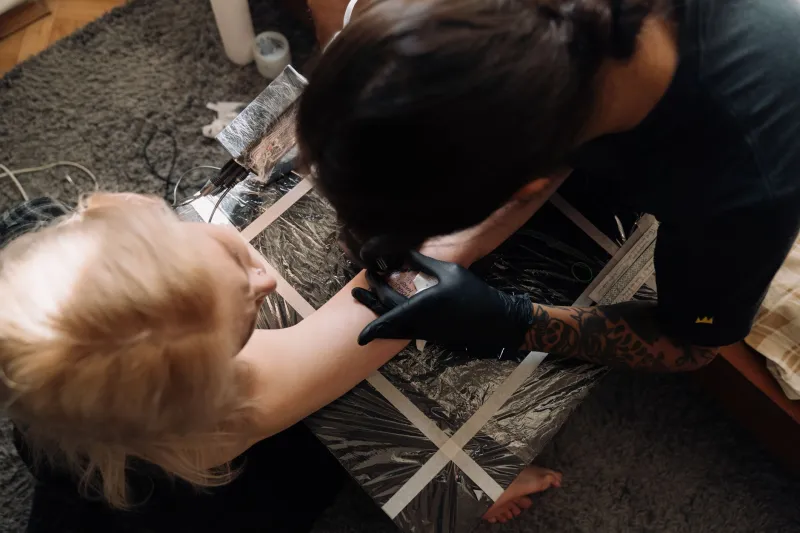
Ask your artist. Seriously. Tell them where you're thinking and ask what they'd consider. A good artist has seen how designs land on bodies in ways you haven't, and that perspective is part of what you're paying for.
The canvas matters as much as the art. When you treat placement as a real decision—not just a logistical one—you end up with a tattoo that works on every level. Aesthetically, personally, and permanently.