Permanent Doesn't Mean Regret: The Truth Behind That Tattoo You're Afraid to Get
Ask almost anyone why they haven't gotten a tattoo yet, and you'll hear some version of the same answer: What if I regret it? It's practically a cultural reflex at this point — the assumption that permanence and regret are basically synonyms when it comes to ink. But here's the thing: the numbers don't really back that up. And the people who've actually lived with their tattoos for decades? Most of them aren't lying awake at night wishing they'd stayed blank.
So where did this idea come from, and why does it stick around even as tattoo culture becomes more mainstream than ever?
The Regret Narrative vs. The Actual Data
Studies on tattoo regret tend to surface the same headline-grabbing stat: somewhere between 17 and 25 percent of tattooed Americans report some level of regret about at least one of their pieces. That sounds significant until you zoom out. Research published in the Journal of Clinical and Aesthetic Dermatology found that the vast majority of people with tattoos — even those who expressed mild dissatisfaction with a specific piece — had no interest in removal and didn't consider their tattoo a mistake in any meaningful sense. Mild regret about one tattoo out of several is a very different thing than wishing you'd never walked into a studio.
For context, Americans report higher regret rates about financial decisions, relationship choices, and educational paths than they do about their tattoos. But nobody's writing think pieces about whether you should reconsider getting a mortgage.
Why the Panic Persists
Part of the problem is survivorship bias — or really, the opposite of it. The person who got a tribal armband at nineteen and hated it for thirty years makes for a much better cautionary tale than the person who got a floral sleeve at twenty-five and still loves it at fifty. Regret stories travel. Satisfaction stories just kind of... live quietly on people's skin.
There's also a generational gap in how tattoos were approached. For a lot of older Americans, getting a tattoo in the '70s, '80s, or even early '90s meant walking into a shop, picking something off a flash sheet, and walking out twenty minutes later. The process was transactional. There wasn't much consultation, there wasn't a lot of emotional intention baked in, and the connection between the person and the piece was often pretty thin. That context matters when we talk about regret.
Modern tattoo culture is genuinely different in ways that go beyond just better ink and more skilled artists.
The Intentionality Shift
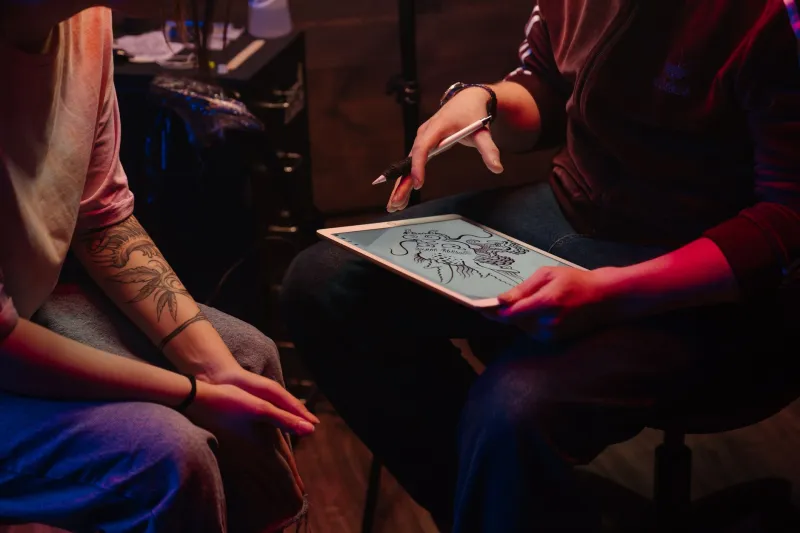
Spend any time talking to tattoo artists today and one theme comes up over and over: clients arrive prepared. They've done research. They've saved reference images for months. They've thought about placement, meaning, and how a piece might interact with their existing work or future plans. The consultation process at most reputable studios now involves real conversation — about lifestyle, skin tone, how a design will age, and what the tattoo means to the person getting it.
That level of intentionality fundamentally changes the emotional stakes. When you've spent three months thinking about a piece, talked through it with an artist you trust, and made a deliberate choice — that's not an impulse you're likely to wake up regretting. It's a decision you've already stress-tested.
Psychologists who study decision-making point out that regret tends to spike when people feel like a choice was made to them rather than by them. Rushed decisions, peer pressure, lack of information — those are the conditions that breed regret. A thoughtful, collaborative tattoo process is almost the opposite of that environment.
What Long-Term Clients Actually Say
Talk to people who've been tattooed for ten, twenty, thirty years and the conversations get interesting fast. Yes, some of them have pieces they'd do differently now. Styles evolve. Tastes change. A tattoo that felt edgy at twenty-two might feel a little dated at forty-five. But "I'd do it differently" and "I wish I'd never done it" are miles apart.
What comes up more often than regret is something closer to the opposite: a sense that their tattoos are a kind of autobiography. Each piece marks a version of themselves that existed at a specific moment — a relationship, a loss, a transition, a period of becoming. Even the tattoos that feel a little rough around the edges now carry that weight. They're evidence of a life actually lived.
There's something almost liberating about that framing. Permanence stops being a threat and starts being the whole point.
When Regret Is Real (And What It Usually Looks Like)
None of this means regret doesn't exist — it does, and it's worth taking seriously. The tattoos most associated with genuine, lasting regret tend to share a few characteristics: they were done impulsively, they involve names of romantic partners, they were chosen without much personal meaning, or they were executed poorly by an artist who wasn't right for the style.
The good news is that most of those risk factors are entirely avoidable. Choosing an artist whose portfolio genuinely excites you, taking time with the design, skipping the name of someone you've been dating for three weeks — these aren't revolutionary ideas, but they dramatically shift the odds in your favor.
And for the pieces that do become regrets? Removal technology has improved enormously, and coverup artistry is its own legitimate craft. A bad tattoo isn't a life sentence. It's just a chapter that might need editing.
Permanence as Permission
Here's the reframe that seems to resonate with a lot of people who've crossed over from "thinking about it" to "actually tattooed": permanence isn't a cage. For many people, it's a commitment to themselves. It's saying, this mattered enough to mark. That's not reckless — it's actually kind of profound.
The cultural narrative around tattoo regret has always been more about discomfort with the unconventional than about any real statistical risk. The evidence suggests that most people who get tattooed, especially those who approach it with even a modest amount of thought and care, end up feeling just fine about it. Often more than fine.
So if you've been sitting on an idea, turning it over in your head, wondering if future-you is going to be furious — maybe consider that future-you might actually be grateful. The canvas is yours. What you put on it is worth thinking about, but it's probably not worth being afraid of.