What the Walls Are Telling You: How to Read a Tattoo Studio Before You Book
Most people walk into a tattoo studio, glance around nervously, and head straight for the portfolio binder. Which makes sense — you want to see the work. But here's the thing: the art on the walls, the flash sheets pinned above the stations, the way everything is (or isn't) organized — all of that is communicating something. And if you know how to listen, it can save you from a consultation that goes nowhere, or worse, a tattoo you didn't quite love.
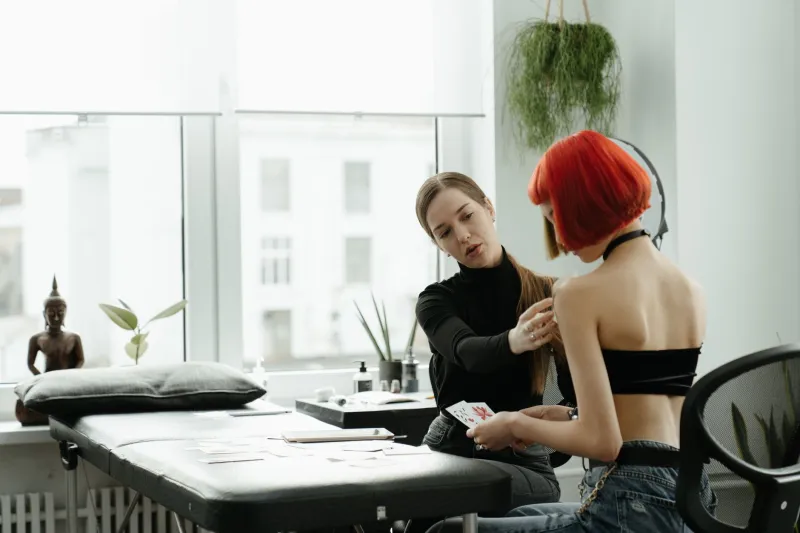
Think of a studio visit like a first date. The finished portfolio is what someone says about themselves. The studio environment is how they actually live.
Flash Wall Basics: What Is It, Exactly?
For anyone newer to tattoo culture, a flash wall is exactly what it sounds like — a display of pre-drawn designs that are ready to tattoo, often available at a fixed price. Traditionally, flash was printed or painted on paper and tacked to the wall in long sheets. These days you'll see everything from laminated prints to hand-painted originals to digital displays.
But beyond the format, the content of a flash wall is a window straight into an artist's aesthetic comfort zone. These are the designs they chose to make — not client requests, not compromises. Pure creative expression. When an artist designs flash, they're essentially saying: this is what excites me right now.
So what does the flash actually say?
Bold and Traditional: The Artist Who Knows Their Roots
If you walk in and the walls are covered in thick-outlined roses, daggers, eagles, and nautical stars rendered in a limited color palette, you're looking at an artist who has deeply studied American Traditional tattooing. That's not a knock — it's a signal of intentional craft.
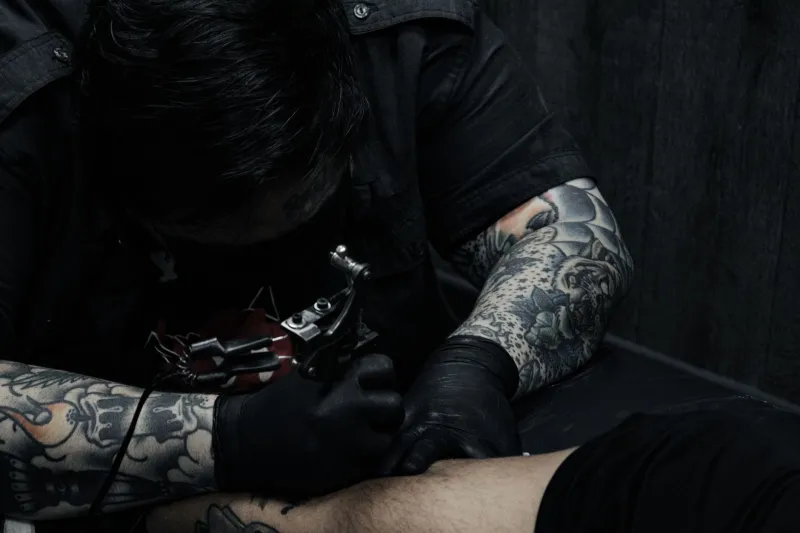
Traditional flash tends to be bold for a reason. Those designs were built to last decades on skin, to hold up through sun exposure and time. An artist who gravitates toward that style understands longevity at a technical level. They also tend to be fast, efficient, and confident. They've tattooed the same iconic shapes enough times to have real mastery.
If that's your vibe, great. If you came in with a soft, ethereal watercolor concept, you might be asking them to work outside their wheelhouse — and that conversation is worth having before you book.
Delicate and Illustrative: The Artist Who Thinks Like a Painter
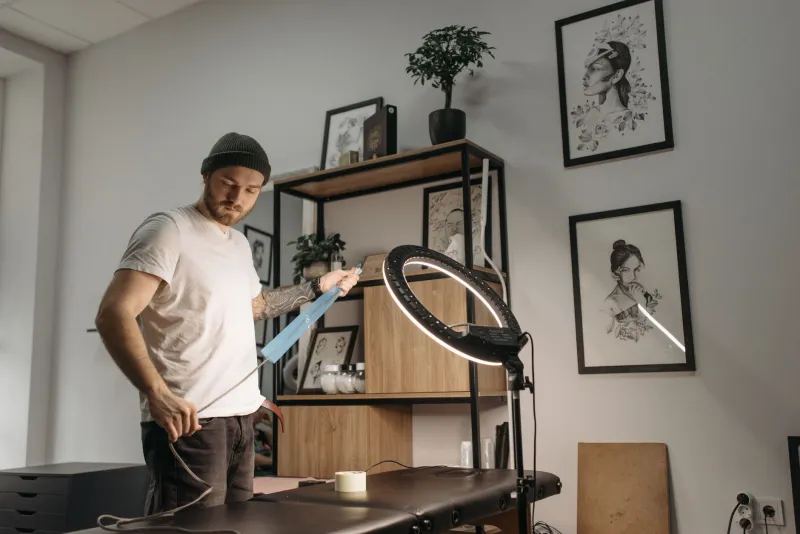
On the other end of the spectrum, you'll find studios where the flash looks more like fine art prints. Intricate botanical drawings, soft shading, single-needle micro work, architectural details. These are artists who lean into precision and often come from backgrounds in illustration or fine arts.
The flash in these spaces tends to be lighter — sometimes literally, with lots of negative space — and the subject matter often skews toward the personal or conceptual. Portraits of women with flowers growing from their hair. Geometric mandalas. Detailed moth wings.
What this tells you: this artist probably loves the consultation process. They likely want to know your story, your references, your mood board. They're not going to rush you. But they may also be selective about what they take on — don't be surprised if they redirect you if your concept doesn't align with their current focus.
Organized vs. Eclectic: The Presentation Matters Too
Beyond the subject matter, pay attention to how the flash is displayed. Is it curated? Framed? Hung with intention? Or is it a chaotic, joyful explosion of everything the artist has ever been into?
Neither is wrong, but they signal different things.
A tightly curated flash wall — where every piece feels like it belongs in the same visual universe — suggests an artist with a strong, specific point of view. They know their brand. They know what they want their work to look like. That kind of clarity is great if your vision aligns with theirs. It can feel limiting if it doesn't.
A more eclectic wall, where Japanese-influenced waves sit next to neo-traditional portraits and tiny minimalist line work, suggests an artist who is genuinely versatile — or one who is still figuring out their lane. Ask questions. Look at the portfolio with that in mind.
Subject Matter as a Personal Statement
Here's a detail a lot of people miss: the themes in flash are often personal. An artist who keeps returning to skulls, memento mori imagery, and dark botanical work is probably someone who finds beauty in transience and mortality. That's not a red flag — it's a philosophy.
An artist whose flash is full of animals, natural landscapes, and earthy color palettes might be an outdoorsy person whose relationship with nature bleeds into their art. An artist with pop culture references, bold graphic shapes, and a sense of humor in their designs might be someone who keeps the process light and fun.
You don't have to share their worldview to get a great tattoo from them. But knowing it helps you understand whether your energy and theirs are going to mesh during a session that could last several hours.
What Happens When There's No Flash?
Some studios don't have flash walls at all. Some artists work exclusively custom, appointment-only. This isn't a red flag, but it does tell you something: this person probably wants a deeper creative investment from you as a client. They're not in the business of quick, same-day pieces. They want a collaboration.
If you're a first-timer who isn't sure exactly what you want, that setup might feel intimidating. If you're someone with a very specific vision who wants to co-create, it might be exactly what you're looking for.
The Studio Tour as Research
Before you ever sit down in the chair, give yourself permission to really look around. Not just at the portfolio, but at the whole room. What's playing on the speakers? What does the energy feel like? Is the flash recent, or does it look like it's been up since 2009? Are the artists engaged with each other and their clients, or does it feel transactional?
A flash wall is the most honest advertisement an artist will ever make — because they made it for themselves, not for you. Learning to read it means you're no longer walking into a studio blind. You're walking in with context.
And that context? It's the difference between booking an appointment and booking the right appointment.