Slow Your Roll: The Case for Taking Your Time Between Tattoo Sessions
There's a certain energy that hits after you walk out of the studio with fresh ink. You're already thinking about the next one. Maybe you've got a half-sleeve in mind, or you're slowly working toward a full back piece, or you're just chasing that feeling of sitting down and watching something permanent take shape on your skin. Whatever the reason, the itch to book again — immediately — is real.
But here's something the best artists in the business will tell you straight up: the wait matters just as much as the work.
Spacing out your sessions isn't about slowing down your vision. It's about protecting it.
What's Actually Happening Under Your Skin
Most people think of tattoo healing as a surface-level thing. The redness fades, the peeling stops, and boom — healed. But that's really just the first chapter. What's happening beneath that outer layer is a longer, more involved process that most clients never think about.
When a tattoo needle deposits ink into the dermis — the second layer of skin — your body immediately kicks into repair mode. White blood cells rush to the area, treating the ink particles as foreign invaders. Over time, those cells essentially trap the pigment in place, which is what makes your tattoo permanent. But that inflammatory response, along with the physical trauma to the tissue, takes weeks to fully resolve.
On the surface, you might look healed in two to three weeks. Underneath? Your skin is still sorting things out for up to three months. Laying new work over skin that's still in recovery isn't just uncomfortable — it can compromise the quality of both pieces. Ink may not settle as cleanly, colors can appear dull, and the lines may not hold the way they would in fully healed tissue.
In short, jumping back into the chair too soon can undercut the very thing you're trying to build.
What Artists Are Actually Thinking About
Tattooers who specialize in large-scale work — full sleeves, body suits, elaborate back pieces — think about session sequencing almost like architects think about a building. The order matters. The pacing matters. And the client's skin condition at each appointment matters more than most people realize.
Many experienced artists prefer to see a minimum of four to six weeks between sessions on the same area of the body. Some push that to eight weeks or longer, especially for intricate color work or heavily shaded pieces that require the skin to be in peak condition to absorb pigment evenly.
Beyond the healing window, there's also the question of swelling and sensitivity. Even if you're working on different parts of the body in back-to-back sessions, the cumulative stress can affect how your skin responds. Your body has a finite amount of bandwidth for healing, and stacking sessions too close together can stretch that bandwidth thin.
Artists who take session planning seriously are thinking about the long game — not just the piece you're getting today, but how it's going to look in five years alongside everything else on your body.
Building a Collection, Not Just Getting Tattoos
Here's the part that doesn't get talked about enough: the time between sessions is also when your vision has a chance to breathe and evolve.
A lot of people come in with a rough idea of what they want and figure out the details as they go. That's not necessarily a bad thing — some of the most interesting body art develops organically over time. But when you slow down between appointments, you give yourself room to notice things. Maybe the placement of your last piece shifts how you want to approach the next one. Maybe you realize the style you were drawn to six months ago doesn't feel as right anymore. Maybe you want to talk to your artist about adjusting the flow of a sleeve based on how the first session healed.
Patience creates space for those conversations. And those conversations are often what separate a random collection of tattoos from a cohesive body of work.
Think of your skin as a long-term creative project. The best ones aren't rushed.
The Practical Side of Waiting
Beyond the artistic and physiological reasons, there's also just the practical reality of what your body needs after a session.
For the first few weeks, you're dealing with a wound — literally. You're keeping it moisturized, out of direct sun, away from pools and open water, and generally being careful about what touches it. That's not nothing, especially if you're active or work outdoors. Stacking sessions means stacking all of those aftercare obligations at once, which can get exhausting and, honestly, easy to mess up.
There's also the financial side. Quality tattoo work isn't cheap, and it shouldn't be. Spacing out sessions gives you time to save up properly so you're not compromising on the artist or the size of the piece because you rushed the timeline. Your future self — and your future skin — will thank you.
How to Use the Downtime
The gap between sessions doesn't have to feel like dead time. Use it.
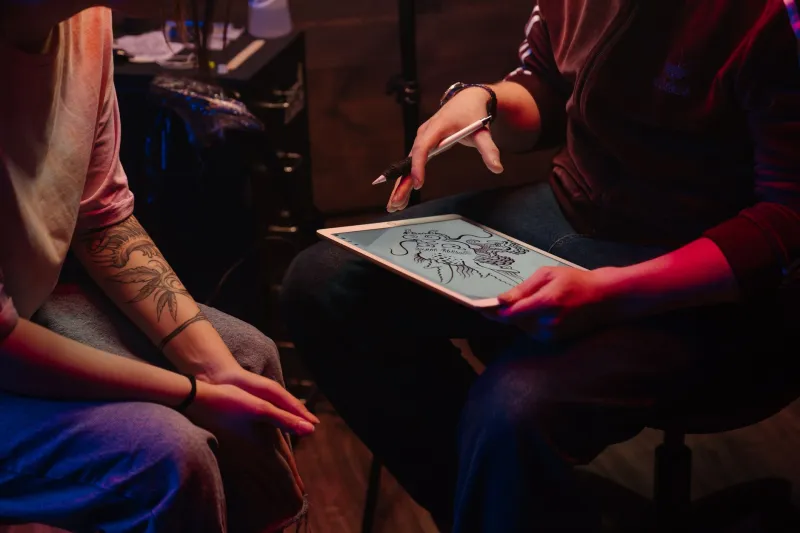
This is the perfect window to dig deeper into your inspiration — pull references, revisit your vision, and have ongoing conversations with your artist about where the project is headed. Follow artists whose work you admire. Spend time in studios as a visitor, not just a client. Think about what story your body art is telling and whether the next chapter still feels right.
If you're mid-sleeve or working on a larger piece, use this time to really live with what you have so far. Wear it. See how people respond to it. Notice how it makes you feel. That feedback — even just the internal kind — can shape what comes next in ways you wouldn't have access to if you were in the chair every few weeks.
The Bottom Line
Getting tattooed is one of the few creative processes where your body is literally part of the medium. That means your skin's condition, its healing capacity, and its readiness for the next session are all part of the artistic equation — not separate from it.
The artists who understand this best are the ones who'll tell you to wait. Not because they don't want your business, but because they care about the outcome as much as you do.
So if you're itching to book again the second your last piece starts to peel, take a breath. Let it settle. Let your skin do its thing. The next session will be better for it — and so will the one after that.