Second Chances in Ink: The Real Art of Transforming a Tattoo You've Outgrown
We've all got that tattoo. Maybe it was a flash design you grabbed off the wall at nineteen. Maybe it's a name that no longer belongs on your body. Maybe the work just aged badly—blurry lines, blown-out shading, colors that faded into a muddy blur over the years. Whatever the backstory, you've spent enough time tugging your sleeve down at work or angling your arm away from photos. The good news? Your skin isn't a dead end. It's still a canvas—just one with a little history written into it.
Cover-up tattoos have become one of the most requested services at studios across the country, and for good reason. When done right, they don't just hide something you'd rather forget—they replace it with something you're genuinely proud to wear. But getting there takes more than just booking the first available artist and crossing your fingers. It takes the right approach, the right design, and honestly, the right expectations.
What a Cover-Up Actually Is (and Isn't)
Let's clear something up right away: a cover-up isn't the same as tattooing over something and hoping for the best. It's a deliberate, strategic process where an artist works with the existing ink—its placement, its density, its shape—to design something new that absorbs or redirects attention away from what's underneath.
The existing tattoo doesn't disappear. It gets incorporated. Think of it less like painting over a wall and more like building a new mural on top of one. The old work influences the new work whether you want it to or not, which is exactly why the design phase of a cover-up is so critical.
Some people confuse cover-ups with laser removal, and while the two can absolutely work together (more on that in a minute), they're different tools. A cover-up is a tattoo solution. Laser removal is a medical one. Knowing which path—or combination of paths—makes sense for your situation is step one.
Why Cover-Ups Are Technically Harder Than Starting Fresh
Ask any experienced tattoo artist and they'll tell you: cover-ups are some of the most challenging work they do. When you're starting on clean skin, the artist has full control over what goes down. With a cover-up, they're essentially problem-solving in real time, working around an obstacle that's already embedded in your dermis.
Dark ink is especially tricky. Black and dark blue pigments are the hardest to cover because they absorb light rather than reflect it, which means lighter colors placed over them tend to look dull or get swallowed up entirely. This is why you'll notice that most successful cover-ups lean into bold, saturated designs—think dark florals, dramatic geometric patterns, dense illustrative work, or deep blackwork styles. These aren't just aesthetic choices; they're strategic ones.
The size factor matters too. A cover-up almost always needs to be larger than the original piece. That's just the physics of it—you need enough new ink surrounding the old design to visually redirect the eye and prevent the old work from bleeding through at the edges. If you were hoping to cover a palm-sized piece with something dainty and delicate, you're going to need a frank conversation with your artist about what's actually achievable.
The Design Conversation You Need to Have
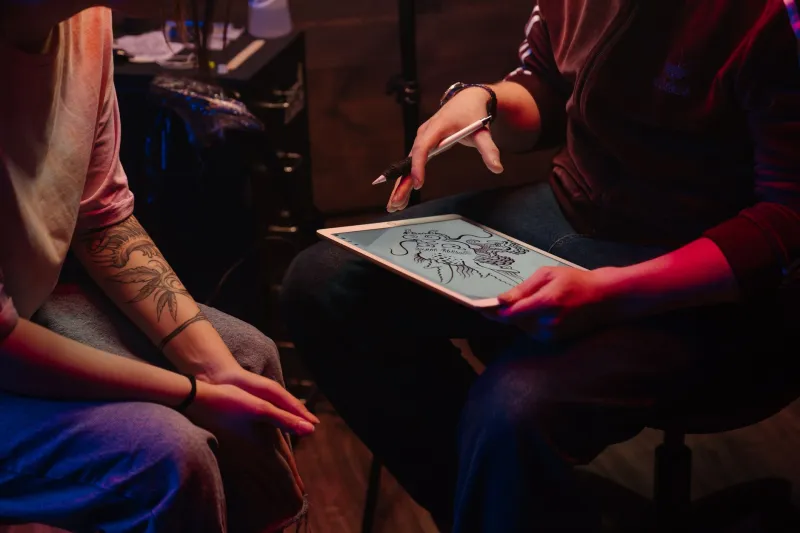
When you walk into a studio for a cover-up consultation, the best artists aren't going to hand you a binder of flash and tell you to pick something. They're going to look at your existing tattoo—really look at it—and start thinking about what design elements can work with the underlying ink rather than against it.
A few things that typically come up in that conversation:
Color palette. Warm, dark tones tend to cover more effectively than cool or pastel ones. Deep reds, forest greens, rich purples, and of course black are your best friends in a cover-up scenario.
Placement and flow. The shape of the original tattoo often dictates the shape of the new one. A horizontally oriented piece might lend itself to a landscape or banner design. A circular shape might evolve into a mandala or a compass rose.
Subject matter. Dense subject matter—flowers with lots of petals, animals with heavy texture, abstract patterns with varied line weights—tends to work better than minimal designs with lots of open space.
Be open to your artist's suggestions even if they push you slightly outside your original vision. They're not trying to upsell you or steer you somewhere you don't want to go. They're trying to give you the best possible result with the canvas you've got.
When Laser Removal Comes Into Play
Sometimes the smartest move before a cover-up is a few rounds of laser removal—not to erase the tattoo entirely, but to fade it enough that your artist has more flexibility with the new design. This approach has become increasingly common, especially for people with very dark or very dense original work.
Partial fading via laser can open up lighter color options, allow for a smaller cover-up design, and give the new tattoo a cleaner foundation to sit on. It adds time and cost to the overall process, but for the right situation, it's absolutely worth it. Your artist can tell you during the consultation whether they think it would make a meaningful difference in your case.
Real Transformations That Prove It's Possible
The before-and-afters you see on artists' Instagram pages aren't cherry-picked flukes—they're the result of genuine skill and thoughtful planning. Across the country, people are walking out of studios with pieces they're genuinely excited about, built on top of work they used to hide.
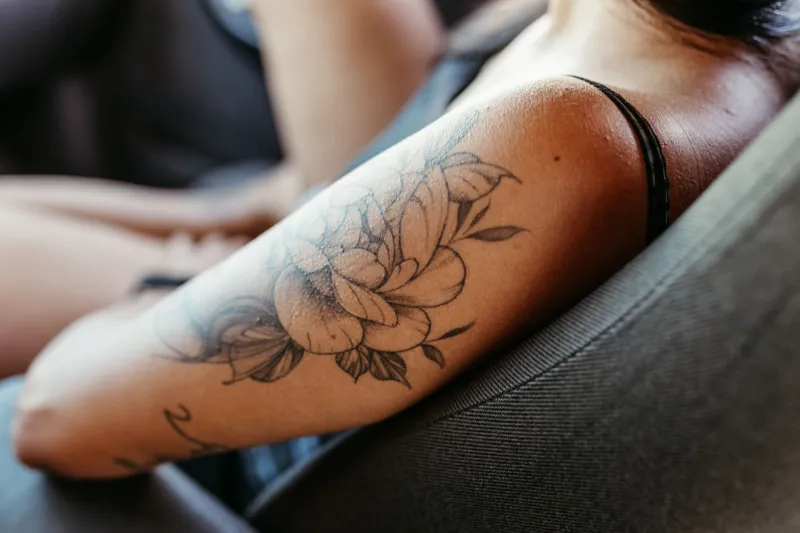
A faded tribal sleeve becomes a lush botanical garden. A poorly executed portrait transforms into a surrealist composition. A name in script disappears into the wings of a moth or the petals of a peony. These aren't magic tricks. They're the product of an artist who understands both the technical constraints and the creative possibilities of working with existing ink.
The emotional component is real too. There's something genuinely powerful about reclaiming a piece of your skin—taking something that carried negative associations and turning it into art you chose, on your own terms. More than a few people describe their cover-up session as one of the most cathartic tattoo experiences they've ever had.
How to Find the Right Artist for the Job
Not every tattooist has significant cover-up experience, and that's okay—it's a specialty. When you're researching artists, look specifically for cover-up work in their portfolio. Not just healed photos of clean pieces, but documented before-and-afters that show you what they started with and what they built on top of it.
Don't be shy about asking direct questions during your consultation. How many cover-ups have they done? What's their general approach? What do they think is realistically achievable with your specific piece? An artist who gives you straight, honest answers—even if those answers include limitations—is one you can trust.
Your old tattoo told one story. It doesn't have to be the last word. With the right artist and the right plan, your skin's narrative is still very much being written.